
NEW DELHI: The Air India flight schedule is once again under pressure as the airline struggles to restore its international network after the tragic crash at Ahmedabad on June 12, 2025. Just weeks ago, CEO Campbell Wilson assured passengers in an email that full restoration of flights would begin from October 1, 2025. However, data shared by aviation analytics company Cirium shows that instead of returning to normal, Air India is making further changes that involve cancellations, route withdrawals, and frequency reductions across its core widebody international services.
The gap between the CEO’s promise and the current operational reality raises serious questions about Air India’s ability to meet its own deadlines under the ongoing Vihaan. AI turnaround program.
Scaling Back Instead of Scaling Up
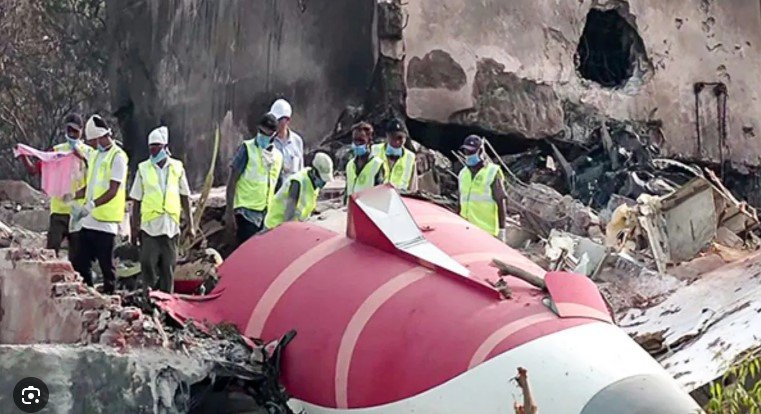
Following the June crash of flight AI171 shortly after takeoff for London Gatwick, Air India flight schedule has been forced to rethink its schedule. The airline, which had previously boosted its international services to Europe and Africa, has now begun trimming routes. Some services have been shifted to Air India Express, while others—such as Pune-Singapore, Delhi-Nairobi, Goa (Mopa)-London Gatwick, and Delhi-Washington—are being withdrawn completely.
This shift comes at a time when the airline had just expanded capacity in March 2025, adding more flights to Birmingham, Zurich, Vienna, London, and Nairobi. However, rerouting due to Pakistan’s airspace closure, complications from Middle East conflicts, and increased ground-time requirements for safety checks have further slowed its recovery.
European Network Under Pressure
Air India’s European operations are seeing noticeable cuts this winter season. Frequency reductions include:
-
Milan: Reduced from seven to six weekly flights.
-
Zurich: Down to four weekly flights.
-
Copenhagen: Reduced to four weekly flights.
Meanwhile, Goa (Mopa)–London Gatwick, already suspended, will not return, and services to Birmingham from Amritsar are being cut from four to three weekly flights. Only Ahmedabad and Amritsar will continue serving London Gatwick with three weekly flights each, a far cry from the airline’s earlier ambitious footprint.
Setbacks in North America
North America, Air India’s most lucrative long-haul market, is also seeing service reductions. The airline has:
-
Withdrawn completely from Delhi–Washington.
-
Reduced Delhi–Chicago from daily to four weekly flights.
-
Cut Delhi–Newark from five to four weekly.
-
Scaled back Delhi–New York and Mumbai–New York from daily to six weekly flights.
For passengers, this means fewer choices, tighter capacity, and potentially higher fares during peak demand seasons. For Air India, it suggests difficulty in balancing demand, costs, and fleet readiness.
The Role of Fleet Refurbishment and Airspace Restrictions
Air India’s much-delayed fleet refurbishment program is progressing, but slowly. One Dreamliner is already undergoing upgrades in the US, with another scheduled to follow soon. The airline is also working on its Boeing 777s, aiming to improve cabin quality and operational efficiency.
Simultaneously, Pakistan’s continued airspace closure has forced longer flight times, additional fuel stops, and tighter aircraft utilization. This challenge is compounded by renewed opportunities in China, where routes are reopening and demanding aircraft allocation.
All these factors together limit the airline’s flexibility to operate at full strength, even if passenger demand exists.

Passenger Confidence Still Fragile
The June 2025 crash dealt a heavy blow to Air India’s reputation in international markets. While the direct cause of the crash is still under investigation, the resulting ground checks, safety audits, and operational changes have added layers of complexity.
Market experts note that if passenger confidence has weakened, the airline may need to lower fares to stimulate demand, making certain routes financially unsustainable in the short term. Adjusting frequencies, therefore, becomes a survival strategy rather than a choice.
Impact on VIA Hub Strategy
Earlier this year, Air India had been reshaping its network with an emphasis on its “VIA” campaign, positioning Delhi as a major transfer hub for international-to-international connections. The airline had realigned timings of flights to Europe and Australia to maximize connectivity.
However, with the recent cancellations and cuts, this strategy risks losing momentum. For transit passengers seeking seamless connections, consistency of service is just as important as frequency, and Air India’s recent pullbacks may hinder Delhi’s emergence as a global hub.
What’s Next for Air India?
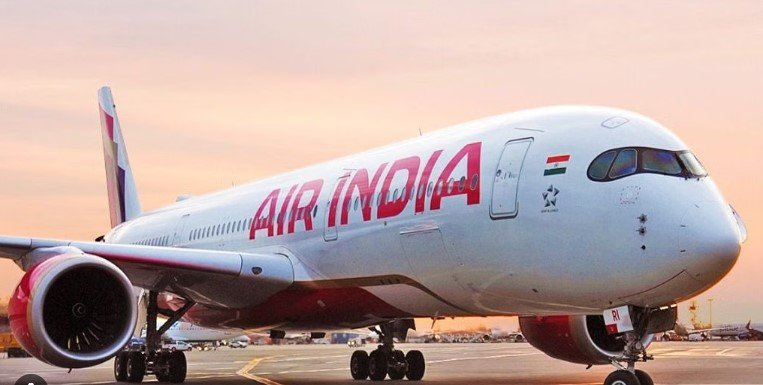
Despite setbacks, Air India continues to induct new aircraft. At least one Dreamliner and one Airbus A350 are expected to join the fleet this financial year. These additions could help stabilize operations, even if expansion plans are slowed.
The airline’s Vihaan.AI turnaround plan, structured in three phases—Taxi, Take-Off, and Climb—is currently in the Climb stage. This phase is focused on operational excellence and customer experience. While progress has been made on foundational improvements, the current schedule cuts suggest that achieving operational stability may take longer than initially promised.
Industry Outlook
Aviation analysts believe that Air India’s cautious retrenchment may ultimately prove beneficial. By prioritizing reliability and safety over aggressive expansion, the airline could rebuild credibility with international passengers.
However, there is also a risk of losing ground to competitors like Emirates, Qatar Airways, and Singapore Airlines, who may capitalize on reduced Air India frequencies to capture more India-bound traffic.
Conclusion
The Air India flight schedule remains under strain, with CEO promises of full restoration from October 1 now looking unrealistic. Operational challenges, airspace restrictions, ongoing refurbishments, and the aftershocks of the June crash have combined to slow the airline’s recovery.
For passengers, this means fewer flights and less flexibility in the months ahead. For Air India, it’s a reminder that transformation requires not just ambitious plans but also the resilience to manage setbacks.
With over two years left in the Vihaan.AI turnaround program, the airline’s ability to strike a balance between safety, stability, and growth will define whether it can truly reclaim its position as a global aviation leader.